CCT Lab
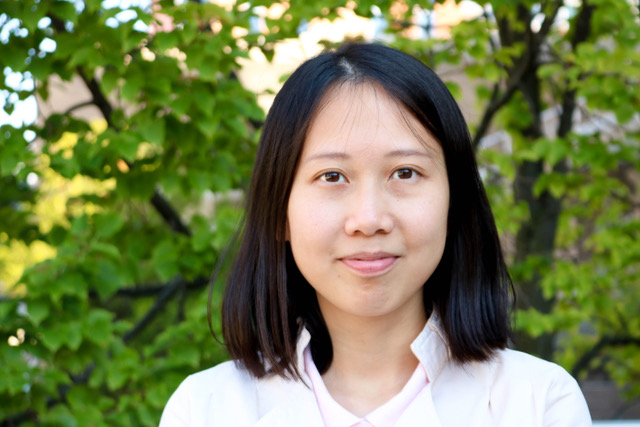
I direct the Computational Communication Technology Lab (CCT). We study how search, social platforms, journalism, and AI shape public information in health and politics.
Students bring backgrounds in journalism, communication, informatics, computer science, data science, and statistics. They develop research skills through projects that connect these fields.
What you could study
The group works across four connected areas. Doctoral students develop their own questions and a program of research, drawing on these areas and the group’s expertise.
AI and algorithmic information systems
Audit how search engines and generative AI systems select, synthesize, cite, and communicate public information across topics, languages, and time.
Health communication and information equity
Study which health information is available, how it circulates, what remains difficult to find, and how uncertainty and guidance are communicated.
Political communication and journalism
Examine credibility, political search, misinformation, emerging forms of local news, and the ways platforms and AI alter public communication.
Computational measurement
Develop and validate research workflows using text, networks, digital traces, surveys, experiments, and systematic human judgment.
What the work involves
Develop a research question and connect it to communication theory.
Collect and organize the data needed to answer the research question.
Choose methods deliberately, validate outputs, and examine alternative explanations.
Write for publication, present the findings, and explain the contribution and its scope.
Students contribute to literature reviews, data collection and coding, analysis, visualization, and writing. Projects use Python or R, language and network analysis, surveys, experiments, and interviews as the question requires. I value curiosity, intellectual fit, and a commitment to learning; students develop technical skills through the research.
Mentoring and expectations
Independent thinking
I provide structure, feedback, and methodological guidance. Students take increasing ownership of their questions, decisions, deadlines, and scholarly arguments.
Publishable research
Students learn the full research process and work toward conference presentations, manuscripts, and proposals. We discuss roles and authorship early, then revisit them when contributions change.
Careful analysis
Students check data quality, evaluate their methods, and support interpretations with evidence. Conclusions should reflect what the study can establish.
Career development
I support academic and nonacademic paths. Students build experience in research, teaching, grant writing, and collaboration according to their goals.
Use AI with clear intellectual ownership.
In our research, students can use AI to learn, debug, expand a search, implement procedures they understand, or critique a draft. They check its outputs, explain their research decisions, and take responsibility for the question, evidence, analysis, and argument.
Pathways at Missouri
I can advise doctoral students in both the Missouri School of Journalism Ph.D. program and the Institute for Data Science & Informatics Ph.D. program. Journalism students can build a computational emphasis through their methods choices and an approved supporting field, drawing on courses and collaborators in IDSI, Communication, Political Science, Information Science, Statistics, Computer Science, and related programs. I teach graduate courses in natural language processing and communication network analysis through IDSI.
How to contact me
Email ctong@missouri.edu with the subject line Prospective research student. Please include:
- Your current program or the Missouri program you are considering.
- A short explanation of the research question or area you want to pursue and why this group would be a good fit.
- One or two of my recent papers you read and a specific question or connection they raised for you.
- Your CV and one relevant writing, coding, or research sample.
For Ph.D. inquiries, tell me about the questions you hope to develop into an independent program of research. Admission and assistantship decisions follow the procedures of the relevant Missouri program.
Current group
Temitope Eyinla
Temitope studies health informatics, causal inference, and computational methods for examining health information. Our collaborations include a framework for auditing topics generated by models and a longitudinal audit of Google AI Overviews.
View institutional profileKrishna Karra
Krishna works on computational research infrastructure and the longitudinal audit of Google AI Overviews. He received Missouri’s 2026 Award for Academic Distinction for intellectual curiosity and academic work beyond the classroom.
Read the award profileAbiodun Sadiq
Abiodun studies organizational leadership, reputation, and technology adoption. He is a coauthor on our longitudinal audit of the availability and stability of Google AI Overviews in English and Spanish.
View institutional profileFutian Han
Futian studies health and computational communication, focusing on how emerging technologies and cultural contexts shape access to and engagement with information. In the group, she contributes to browser extension development and cancer communication research.
View institutional profileKrishna Karra receives the Award for Academic Distinction
Missouri recognized Krishna for academic work extending beyond the classroom, including research, technical leadership, and service. I nominated Krishna after supervising his independent research in computer science.
Read the College of Engineering profileSelected student trajectories
Tanner is a master’s student in Communication. As an undergraduate mentee at Missouri, he coauthored the manuscript “Framing and Nationalization in Pink Slime Politics.”
Shiyu entered graduate study at the University of Southern California after Missouri. At Missouri, she completed an independent study in Journalism and contributed to research in communication and data analysis.
Daiyi is a doctoral student in Communication after completing her master’s degree at Missouri.